
How to Hire a Squarespace Web Designer in 2026: Cost, Questions to Ask, and Red Flags to Watch
About Caresa Hope: Founder of HopeSpring Digital and a digital marketing strategist specializing in SEO, AI-ready content, conversion-focused web design, and business strategy that helps small businesses turn online visibility into measurable growth.
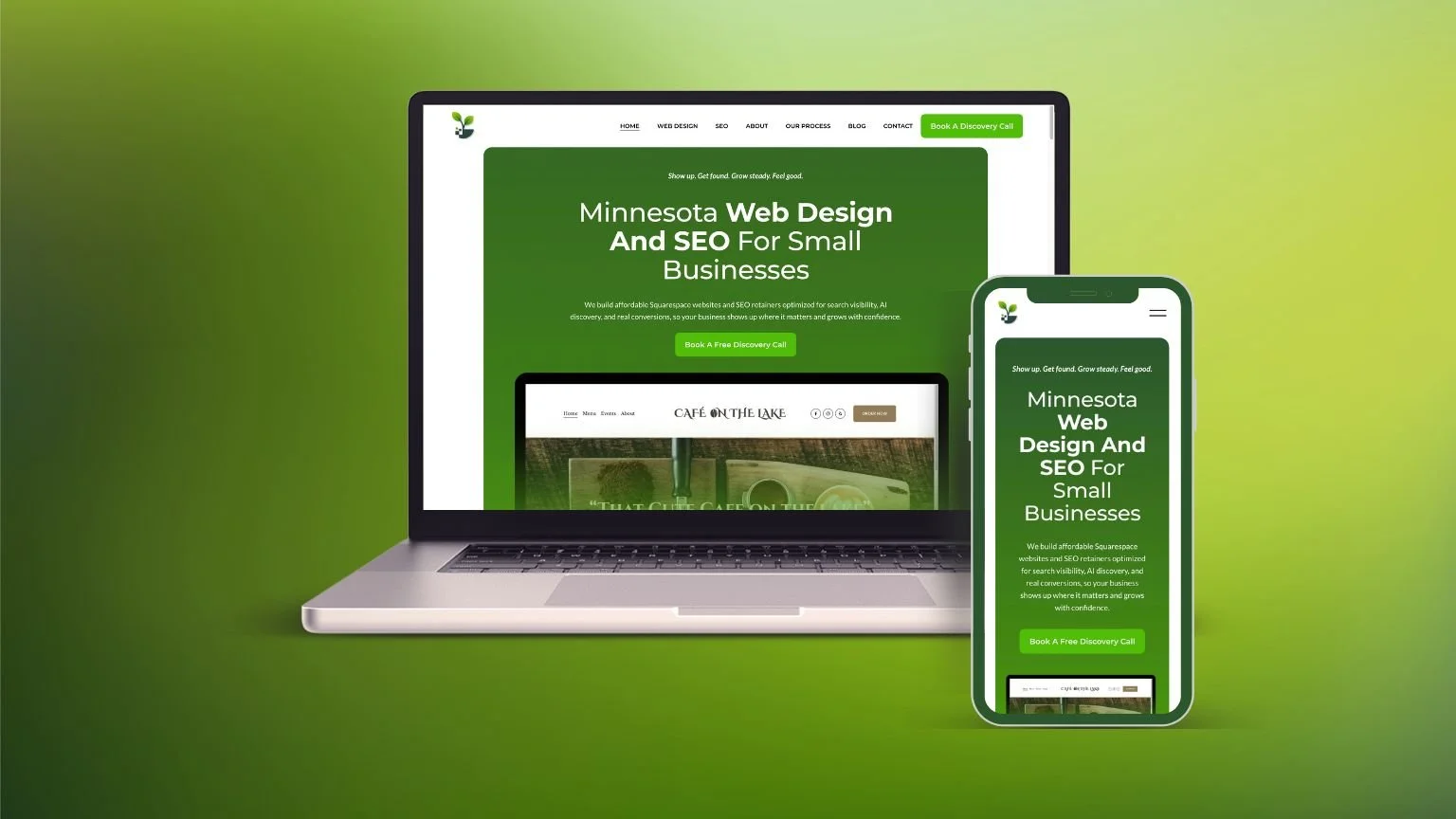
If you've spent more than five minutes searching for a Squarespace web designer, you already know the problem. Pricing is all over the place. One designer quotes $800. Another quotes $6,000. The websites in their portfolios look roughly the same. And you're left trying to figure out what you're actually paying for and whether anyone is worth it.
Here's the thing: Squarespace is a genuinely smart choice for small businesses. It's clean, easy to manage after launch, and doesn't require a developer on retainer just to keep the lights on. But "easy to use" isn't the same as "easy to build well." A site that ranks in Google, loads fast, tells the right story, and actually converts visitors into calls or bookings, that takes strategy, not just a template swap.
I've built over 200 Squarespace websites for small businesses over the past seven-plus years, and the questions in this post are the ones I hear most often from people who found me after a frustrating experience somewhere else. Here's what I wish they'd known before they hired.
What You're Actually Paying For When Hiring A Web Designer
Before pricing makes sense, it helps to understand what a qualified designer is doing behind the scenes. Because a lot of what makes a site good is invisible until it's missing.
When a designer builds your Squarespace site the right way, they're thinking about:
Conversion structure. Where things live on the page, what order they appear in, and how the layout guides a visitor toward taking action. A homepage isn't just a design exercise; it's a strategic document.
SEO setup. Keyword research, page titles, meta descriptions, header hierarchy, image optimization, schema markup. None of this happens automatically when you pick a template.
Copywriting. Your words, shaped for your audience and for Google. This is often the difference between a site that feels generic and one that actually sounds like your business.
Mobile-first design. Not just "it works on mobile", but thoughtfully optimized for the reality that most of your visitors are on their phones.
Analytics setup. Google Analytics 4 and Search Console are connected from day one, so you can actually see what's working after launch.
A clear process. Intake, timeline, revision structure, and handoff, so the project moves forward instead of stalling out.
When you hire a designer who skips any of these, you don't get a discount. You'll get a site that'll need to be redone in 18 months.
How Much Does a Squarespace Web Designer Cost in 2026?
The honest answer is that it depends on the scope. A one-page site for a solo plumber and a six-page custom build for a multi-service remodeling company are genuinely different projects, and pricing them the same wouldn't be fair to either party. Location, project complexity, what's included, and the designer's experience all factor in.
Here's what actually moves the number:
| What Affects the Price | Lower End | Higher End |
|---|---|---|
| Number of pages | 1–3 pages | 6–10+ pages |
| Copywriting | Client provides all copy | Designer writes everything |
| SEO scope | Basic on-page setup | Full keyword research, schema, local SEO |
| Custom features | Standard Squarespace layout | Custom CSS, booking systems |
| Custom code & integrations | None needed | Third-party tools, custom functionality, API connections |
| Turnaround | Standard timeline | Rush or VIP day |
| Location of designer | Varies widely | Varies widely |
With those variables in play, most small business Squarespace projects land somewhere between $1,599 and $6,000+. What you're scoping, and what's actually included, matters more than any single price point.
To give you a real-world example: at HopeSpring Digital, the LaunchSpring one-page website starts at $1,599. It's built for small businesses that need a fast, professional, conversion-ready site without the cost of a full custom build. Custom multi-page websites start at $2,000 and are scoped based on the number of pages, services, and the level of SEO depth the project requires. Both options include copywriting, on-page SEO, GA4, and Search Console setup.
A few ongoing costs most people don't think to ask about upfront:
Squarespace subscription: roughly $23–$49 per month, billed directly to you under your own account.
Website care and maintenance: at HopeSpring, we offer a Website Care Plan, which starts at $179 per month for ongoing updates, performance checks, and SEO health reviews. So, you don’t have to worry about your website and spend more time on your business.
SEO retainers if you want to keep growing after launch: $549–$1,499 per month, depending on competition and your goals.
The cheapest option usually costs more in the long run, through a redesign, a missed lead, or a site that never ranked. The right question isn't "how do I spend the least?" It's "what do I need this site to do, and who can build that?"
What Should Be Included In A Squarespace Web Design Package (vs. What's Usually an Add-On)
A lot of frustration after a web project comes down to scope misalignment: two people had different assumptions about what was included, and nobody caught it until the invoice arrived. Before you sign anything, know what's standard and what's extra.
A solid package should include:
Custom design — not a lightly edited template, but a layout built around your brand and your goals
SEO basics baked in — page titles, meta descriptions, proper header structure, alt text, compressed images
Copywriting, or at minimum guided copy support, so you're not left staring at a blank text box
A mobile-optimized layout that actually looks intentional on a phone, not just functional
Google Analytics 4 and Search Console setup before launch
A revision round with clear parameters
A launch handoff so you know how to manage your own site going forward
What's often extra or a separate service:
Additional pages beyond the base scope
Advanced keyword research and local SEO strategy
Branding, logo design, or brand identity work
Professional photography or stock image sourcing
Ongoing maintenance after launch
Monthly SEO retainer work
At HopeSpring, SEO, copywriting, and conversion optimization are included in every build by default, because launching a site without them is like opening a storefront with no sign out front.
7 Questions to Ask a Squarespace Designer Before You Hire
These are the questions that separate a confident, experienced designer from someone who'll leave you chasing updates three weeks past your launch date.
1. Can I see live portfolio examples, not just screenshots?
Click through real sites. You want to experience them the way a first-time visitor would — how fast they load, how easy it is to navigate on your phone, how quickly you can find the contact button. Screenshots can hide a lot. Also, some designers don’t include live site links on their sites to help limit fraudsters targeting clients, so don’t hesitate to ask for them.
2. Does SEO come with the build, or is it extra?
Most designers don't include SEO in their packages, which can quietly undermine your entire investment from day one. Ask exactly what's covered: keyword research, meta titles, schema markup, image optimization. "Basic SEO" means different things to different people, and it's worth getting specific.
3. What does your process look like from deposit to launch?
A confident designer walks you through this clearly. You should hear something like: here's what I need from you, here's when you'll see a draft, here's how revisions work, here's when we go live. If the only answer you get is "it depends" with no explanation of what it depends on, that's a problem.
4. Who owns the site, the domain, and all accounts when we're done?
You should own everything: the Squarespace site, the domain, Google Analytics, and Search Console. This should be unambiguous and spelled out in the contract. At HopeSpring, this is the baseline: you pay for deliverables and a final product you own and have access to. You're paying for it; it's yours.
5. What do you need from me, and by when?
If the answer is "just send whatever you have whenever you're ready," that's a setup for a project that drags for months. Good designers run a structured intake process. They know exactly what they need, when they need it, and what happens to the timeline if materials are late.
6. How many revisions are included, and what happens if I need more?
Know this before you're two weeks in and asking for your fourth round of changes. One focused revision round is standard at most price points. Additional hours should have a clear, pre-agreed rate to avoid surprises.
7. What kind of support do I get after launch?
Ask about post-launch support: what's covered, for how long, and what happens if something breaks or needs to be updated six weeks down the road. Ask whether ongoing maintenance is available and what it costs. A designer who disappears at launch isn't actually done.
Red Flags to Watch For When Hiring A Designer
Most bad hiring decisions aren't obvious at first. Here's what to keep an eye out for.
Pricing dramatically below market with no explanation. A very low rate is not always a deal. It usually means something is missing: SEO, copywriting, a real process, or experience. What feels like savings upfront often becomes the cost of a redo later.
Vague answers about ownership. If a designer is unclear about who owns the site, domain, or accounts after launch, that's a significant issue, not a minor administrative detail. It is a structural problem. Get clarity before you pay a deposit.
No contract. A real contract protects both of you. It defines scope, timeline, ownership, revision limits, and what happens if something goes sideways. Any professional offering design services should have one. No contract is a reason to walk away. But the contract needs to be understandable, and the designer should be more than happy to answer any questions. It’s a partnership, not a one-sided service.
They don't ask you a single question about your business. If a designer's first conversation with you jumps straight to packages and pricing without asking what your business does, who your customers are, or what you want the site to accomplish, they're not building a strategy. They're building a template with your logo on it.
Guaranteed first-page Google rankings. No one can promise this. If someone does, it is either misleading or the result of tactics that will hurt your site in the long term. Good SEO is a sustained process. Anyone guaranteeing specific rankings at the point of sale is not being straight with you.
How to Evaluate a Quote or Proposal For A Designer
You've sent a few inquiries, and now quotes are landing in your inbox. They look different from each other: different formats, different line items, different totals. Here's how to actually compare them.
What a real proposal should include:
A clear scope of work — specific pages and deliverables
A timeline that explains what happens during the period before review/revisions
A revision policy — how many rounds are included and what that looks like
Payment terms — deposit amount and when the balance is due
Ownership language — who holds the accounts and what transfers to you at the end
It can depend highly on the designer-to-designer and on their process; some may cover information in a call with a simple outline for a proposal, while others may provide a longer proposal. Be sure to confirm the basics of the items above before you say yes and move forward.
How to compare two quotes that look different:
Don't compare the total number. Compare what's inside it. A $2,500 quote that includes copywriting, SEO, and a structured process may be a better value than a $1,500 quote where you're writing all the copy yourself, SEO is an add-on, and the timeline is "whenever it's ready." Break each quote down into its actual components and price out what's missing from the cheaper one. Often, the gap closes fast.
A useful gut-check question: After reading the proposal, do you feel clearer about what you're getting, or do you still have the same questions you started with? A well-written proposal should answer most of them before you ask.
Where to Find a Squarespace Designer
There's no single right place to look, but here's an honest breakdown of where most people start and what you're actually getting from each option.
Squarespace Circle / Marketplace. Squarespace's own directory of vetted designers. Circle membership requires demonstrated experience, which makes it a legitimate credential worth looking for. A reasonable place to start.
Google search. If a designer ranks well in Google for terms like "Squarespace web designer" or "local SEO for small businesses," their own SEO skills are working. That's a reasonable proxy for what they'll be able to do for your site.
Referrals from other small business owners. Still one of the highest-quality sources. Ask in your local chamber of commerce group, business network, or community Facebook group. Personal recommendations come with accountability that cold searches don't.
Upwork and Fiverr. Rates can be very low on these platforms, and you can find talented people. That said, it's riskier for a full build where strategy, SEO, and process matter. Fine for one-off fixes or small edits. For a site you want to grow your business from, vet carefully.
If you're a small business in Minnesota, or anywhere in the U.S., and want a clear conversation about what your site should actually do, book a free discovery call at HopeSpring Digital. No pressure, just a conversation about your business and what your goals are.
Are You Ready to Hire? A Quick Self-Check
Not every business is in the same place, and that's fine. Here's a quick gut-check before you start reaching out to designers.
You're probably ready if:
You know your primary goal — more phone calls, online bookings, local visibility, or simply a professional presence you're not embarrassed to share
You have or can pull together your logo, some photos, and a general sense of your services and what makes you different
You have a realistic budget and a flexible enough timeline to do the project right rather than just fast
You'd rather invest once and get a site that works than patch something together and redo it in a year
If you're not quite there yet, that's okay, too. A discovery call is a good place to sort it out, not a commitment, just a conversation.
Frequently Asked Questions
How much does it cost to hire a Squarespace web designer in 2026?
It depends on the scope of your project. A one-page site with copywriting and SEO included typically starts around $1,599. A custom multi-page build starts at $2,000 and goes up from there based on the number of pages, features, and how much SEO strategy is involved. Beyond the design fee, plan for your Squarespace subscription ($23–$49/month) and any ongoing maintenance or SEO support you want after launch.
What should be included in a Squarespace web design package?
At minimum: a custom design, mobile-optimized layout, on-page SEO setup, copywriting support, Google Analytics and Search Console setup, and a revision round. If SEO or copywriting aren't mentioned in the package, ask about them specifically — they're often left out and they matter.
How long does it take to build a Squarespace website?
For a focused one-page site, expect 7–10 business days once onboarding is complete and your materials are in. A custom multi-page build typically takes 3–6 weeks. Either way, the timeline starts after you've completed onboarding for most designers, not the day you pay your deposit.
Do I own my Squarespace website after it's built?
You should, yes — and you should confirm this before signing anything. Your site, domain, Google Analytics account, and Search Console should all be registered in your name. Any designer who is vague about ownership is a red flag.
Can I update my Squarespace site myself after launch?
Yes. Squarespace is designed to be manageable without a developer. A good designer will give you a handoff walkthrough so you feel confident making basic edits on your own. If you'd prefer not to handle it, a monthly care plan can handle updates for you.
What's the difference between a one-page site and a custom website?
A one-page site is a single, well-structured page that covers your services, story, and contact info — ideal for businesses with a straightforward offering that need to get online quickly and professionally. A custom website spans multiple pages and works well if you offer several services, want dedicated location or industry pages, or need more room to build out your SEO foundation. Not sure which fits? That's exactly what a discovery call is for.
How do I know if a Squarespace designer is legitimate?
Ask to see live portfolio examples you can click through, ask for specifics on what's included in their process, and make sure they use a contract. A Squarespace Circle membership is a vetted credential worth looking for. If they can't clearly answer basic questions about ownership, timeline, or what happens after launch, keep looking.
Do I need SEO if I'm just starting out?
Yes, especially if you're just starting out. The best time to set up SEO is before your site launches, not six months later when you're trying to figure out why no one is finding you. Basic on-page SEO should be part of every new build, full stop.
The goal was never just a website. It was a site that works — one that loads fast, tells the right story, shows up when someone searches for what you do, and makes it easy for them to reach out.
The difference between a site that does all of that and one that just looks okay usually comes down to who built it and what they built it for. Now you know what to ask, what to watch out for, and what a fair price actually looks like.
At HopeSpring Digital, every site we build is designed for real results — not just for looks. If you want a site that shows up in Google, converts visitors, and gives you something you're actually proud of, let's talk. Discovery calls are free, and we'll tell you exactly what we'd recommend for your business.
Book your free discovery call at hopespringdigital.com/discovery-call