
Why “Doing More Marketing” Rarely Fixes a Broken Funnel
About Caresa Hope: Founder of HopeSpring Digital and a digital marketing strategist specializing in SEO, AI-ready content, conversion-focused web design, and business strategy that helps small businesses turn online visibility into measurable growth.
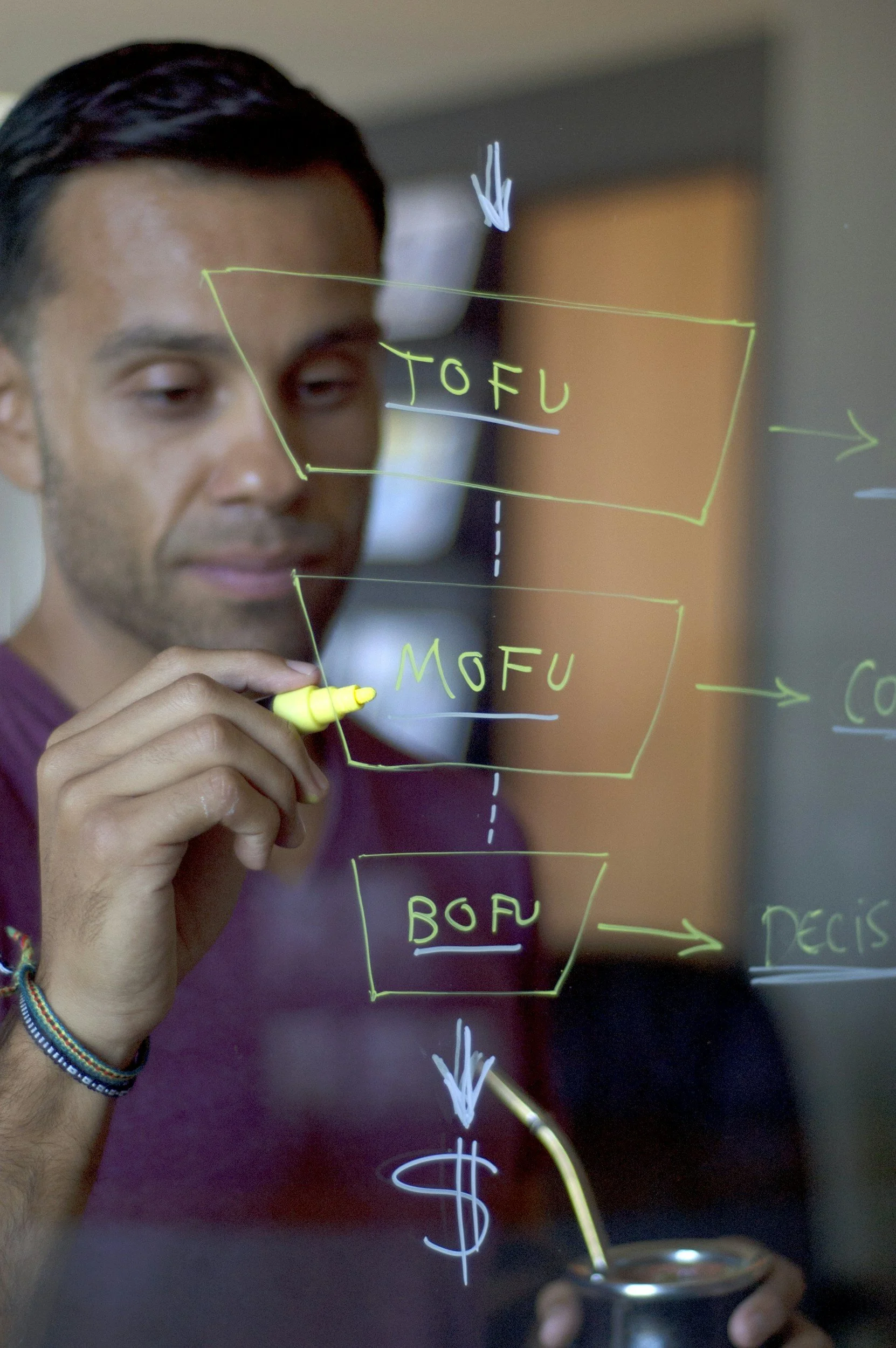
The Hard Truth Most Businesses Miss
When growth slows, the instinct is almost automatic. Do more marketing. More ads, more content, more platforms, more traffic. It feels reasonable. If results are down, exposure must be the problem.
But here’s the hard truth most businesses never hear clearly: If your funnel is broken, more marketing does not fix it. It makes the problem louder.
Marketing brings people in. Funnels decide what happens next. When the system in the middle is unclear, adding volume only amplifies inefficiency.
Key Takeaways
More traffic amplifies funnel weaknesses instead of repairing them.
Most funnels fail due to clarity, trust, or decision friction, not awareness.
Rising traffic can hide conversion problems instead of revealing them.
Fixing the middle of the funnel usually delivers faster ROI than scaling the top .
Sustainable growth happens only after the funnel works consistently.
Why “More Marketing” Feels Like the Obvious Fix
Marketing activity is visible.
Dashboards update. Numbers rise. Tools like Google Analytics show sessions, clicks, and impressions climbing [3]. This creates a sense of progress, even when outcomes stay flat.
The assumption becomes:
If results are slow, we just need more people.
But marketing does not create outcomes. Funnels do.
Marketing fills the funnel. The funnel converts attention into trust, decisions, and revenue.
What a Funnel Actually Does (And Where It Breaks)
A funnel is not a graphic. It is a decision system.
Every visitor moves through the same mental stages:
Relevance: Is this for me?
Trust: Do I believe this?
Clarity: Do I understand what happens next?
Action: Am I ready to move forward?
When any one of these stages breaks, conversion stops.
Most funnels fail quietly in stages two and three, not at the top [2].
The Core Mistake: Confusing Activity With Progress
Many businesses believe funnels fail because not enough people enter them.
In reality, funnels fail because too many people enter without understanding:
Who the offer is for
What problem it solves
Why this business is different
What to do next
This creates cognitive load.
Behavioral research consistently shows that increased complexity reduces decision-making and action [6]. When visitors have to work to understand, they hesitate.
Hesitation is where funnels leak.
Why Adding Traffic Makes Broken Funnels Worse
Here is the math most businesses never look at.
If your funnel converts 1 out of every 100 visitors:
1,000 visitors = 10 leads
2,000 visitors = 20 leads
The conversion rate does not improve. The inefficiency just scales.
Worse, more traffic often:
Increases unqualified leads
Raises ad spend
Skews performance metrics
Creates the illusion of growth without revenue [4]
More volume does not solve friction. It magnifies it.
The Three Most Common Funnel Breakpoints
1. The Message Mismatch
Visitors arrive with intent.
If your messaging does not immediately confirm:
Who you help
What problem you solve
Why it matters now
They leave.
This mismatch between intent and message is one of the most common funnel failures and one of the easiest to overlook [2].
2. The Trust Gap
Interest is not confidence.
Even motivated prospects hesitate when trust signals are weak:
Few or outdated reviews
Inconsistent branding
Vague credentials
Poor usability
Trust evaluation happens quickly and subconsciously. If trust does not form early, the funnel collapses before action [1].
3. Decision Friction
Funnels often break at the point of choice.
Too many services, unclear calls to action, or vague next steps create paralysis. Research shows that reducing friction improves conversion more reliably than increasing exposure [5].
Clear funnels guide decisions. Broken funnels demand effort.
Why Marketing Metrics Often Lie
High-level metrics are seductive.
Impressions, clicks, and sessions tell you how many people entered the funnel. They do not tell you whether the funnel works [3].
This is why businesses celebrate traffic growth while revenue stays flat.
Funnels are measured by outcomes, not activity.
The Correct Order of Growth (That Most Businesses Reverse)
Sustainable growth follows a sequence:
Clarity
Trust
Conversion
Scale
Most businesses try to scale first.
When the order is reversed, marketing becomes expensive and frustrating. When the order is respected, growth feels calmer and more predictable [4].
Why Funnel Fixes Deliver Faster ROI Than New Campaigns
Improving conversion compounds.
A clearer message or stronger trust signal improves results for every visitor, not just new ones. Research consistently shows that conversion optimization delivers higher ROI than acquisition when funnels are weak [5].
This is why funnel fixes often feel immediate. They unlock value that already exists.
When Doing More Marketing Finally Works
More marketing works after the funnel works.
Once:
Messaging is clear
Trust is established
Conversion is predictable
Scaling traffic becomes efficient instead of exhausting.
At that point, marketing multiplies results instead of multiplying friction.
Frequently Asked Questions
How do I know if my funnel is broken?
If traffic grows without proportional leads or revenue, friction likely exists in the funnel [3].
Should I stop marketing entirely?
No. Maintain momentum, but fix conversion issues before scaling further [4].
Is this just about website copy?
No. Funnels include messaging, design, trust, speed, and usability [6].
Can a simple website have a strong funnel?
Yes. Focused funnels often outperform complex ones.
How fast can funnel fixes work?
Often within weeks, sometimes immediately [5].
A More Grounded Way to Think About Growth
Marketing does not fail because businesses do too little. It fails because they do more before fixing what is broken.
Funnels turn attention into outcomes. When they are clear, calm, and intentional, growth feels lighter and more sustainable.
Doing more marketing only works after the funnel does. Until then, the most effective move is not to promote louder. It is a better structure.
Citations
[1] Nielsen Norman Group, Trust and Credibility
https://www.nngroup.com/articles/trust-and-credibility/
[2] Nielsen Norman Group, How Users Read on the Web
https://www.nngroup.com/articles/how-users-read-on-the-web/
[3] Google Analytics Help, Understanding User Behavior
https://support.google.com/analytics/
[4] CXL Institute, Why Traffic Doesn’t Convert
https://cxl.com/blog/why-your-traffic-doesnt-convert/
[5] Harvard Business Review, Reducing Friction in the Buying Process
https://hbr.org/2017/09/how-to-remove-friction-from-the-buying-process
[6] Harvard Business Review, Choice Overload and Decision-Making
https://hbr.org/2015/01/what-is-a-good-value-proposition